


How to Find Remote Jobs as a UK Visa Holder

Remote employment for UK visa holders is defined as any position where the employer permits work from a UK address while also confirming eligibility to sponsor or accept your current visa type. Finding remote jobs as a UK visa holder requires more than a standard job search. You must target roles that explicitly offer visa sponsorship, match your visa category, and comply with UK tax residency rules. Platforms such as UK Visa Jobs and the DWP’s Find a Job portal list verified opportunities specifically for this audience. This guide covers where to search, how to prepare your application, and which pitfalls to avoid.
What Are Visa-sponsored Remote Jobs for UK Visa Holders?
Visa sponsorship in the UK remote job context means an employer holds a valid sponsor licence and agrees to assign a Certificate of Sponsorship to a worker who needs it. Not every remote role offers this. Many employers post remote positions but expect candidates to already hold indefinite leave to remain or settled status, which removes the sponsorship cost entirely.
The most common visa types that permit remote employment in the UK include the Skilled Worker visa, the Graduate visa, the High Potential Individual (HPI) visa, and the Spouse or Partner visa. Each carries different work conditions. Graduate visa holders, for example, can work in any role without restriction for two years after completing a UK degree. Skilled Worker visa holders must work for their sponsoring employer in the specific role stated on their Certificate of Sponsorship.
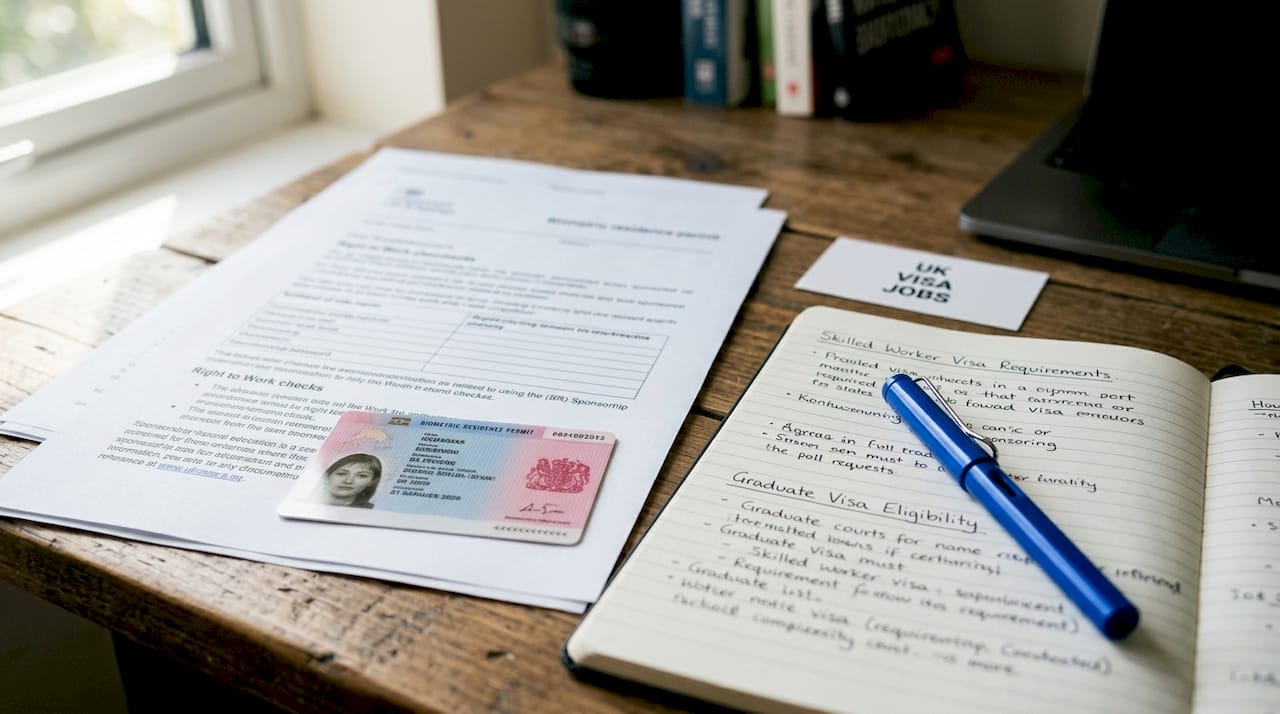
Employers confirm visa status early in the hiring process. Approximately 25% of workforce members on some UK platforms hold sponsored visas, which shows that sponsorship is a normal part of hiring at scale. That figure also means employers have established processes for handling it, so you should not hesitate to disclose your status upfront.
Remote visa-sponsored roles in the tech sector typically offer salaries ranging from £57,800 to £75,000, along with annual learning budgets of around £1,000 and remote equipment such as MacBooks. These packages reflect genuine employer investment in distributed teams, not token gestures.
- Skilled Worker visa: Tied to a specific employer and role; sponsorship required before starting.
- Graduate visa: Two-year open work permission; no sponsorship needed, making you attractive to cost-conscious employers.
- HPI visa: Granted to graduates of top global universities; two years of unrestricted work.
- Spouse or Partner visa: Unrestricted work rights; no sponsorship cost to the employer.
Pro Tip: If you hold a Graduate or Spouse visa, lead with that fact in your cover letter. Employers weigh immediate sponsorship costs heavily, and confirming you require no upfront cost puts you ahead of candidates who do.
Which Platforms Are Best for Remote Work With Visa Sponsorship?
The right platform makes a significant difference. General job boards list thousands of remote roles, but most do not filter for UK tax residency or visa sponsorship eligibility. Searching those boards wastes time and produces applications that go nowhere.
UK-specific remote job boards that emphasise tax residency requirements are the correct starting point. The DWP’s Find a Job portal, for instance, listed 23 fully remote visa-sponsored full-time positions as of early 2026, with one specialist board reporting over 500 verified roles. Those numbers confirm that verified listings exist in meaningful volume.
Uvisajobs curates listings specifically for visa holders, including remote and hybrid positions across tech, finance, and professional services. The platform filters by visa type and sponsorship availability, which removes the guesswork from your search.
| Platform type | Visa sponsorship filter | UK tax residency focus | Typical listing volume |
|---|---|---|---|
| Government portal (DWP Find a Job) | Yes | Yes | Moderate |
| Specialist visa job boards (e.g., Ukvisajobs) | Yes | Yes | High |
| General UK remote boards | Rarely | Partial | Very high |
| International remote boards | No | No | Very high |
The table above shows why international boards produce poor results for visa holders. They carry high volume but have no mechanism to confirm UK residency or sponsorship eligibility. Prioritising UK-specific aggregators reduces wasted applications and keeps your search focused on roles you can actually accept.
Pro Tip: Set up job alerts on Ukvisajobs and the DWP portal using filters for “visa sponsorship” and “fully remote.” New listings appear regularly, and early applications consistently outperform those submitted after a role has been live for a week.
How Do You Prepare Your Application for Remote Sponsored Roles?
A strong application for a remote visa-sponsored role addresses two things simultaneously: your professional suitability and your visa eligibility. Most candidates address only the first. That omission costs them interviews.
Recruitment specialists advise that visa holders emphasise skills matching the UK’s shortage occupation list to improve sponsorship chances, particularly in tech sectors such as machine learning, software engineering, and cybersecurity. Aligning your CV to shortage occupations signals to the employer that sponsorship is justified and straightforward.
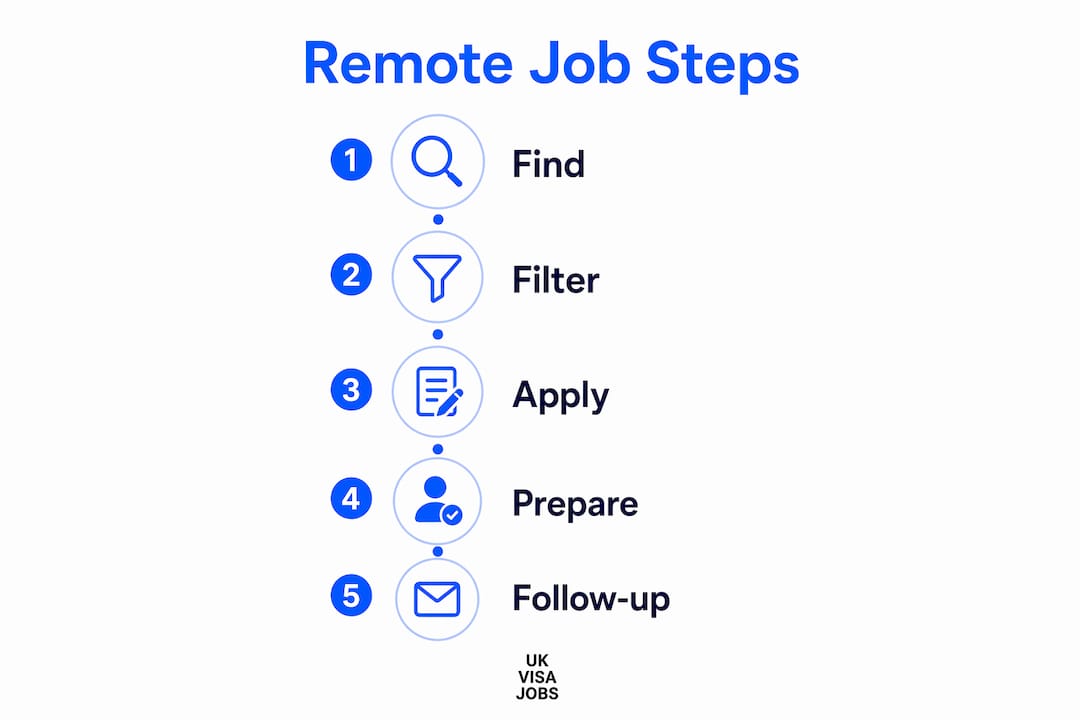
Follow this preparation sequence before submitting any application:
- Confirm your visa category and expiry date. Know exactly which visa you hold, when it expires, and whether you need sponsorship or can work freely. Employers ask this at screening.
- Gather supporting documents. Prepare a copy of your Biometric Residence Permit (BRP), your current visa vignette or digital status link, and your right-to-work confirmation from the Home Office online service.
- Tailor your CV to shortage occupations. Match your skills and job titles to the UK’s shortage occupation list. Use the exact terminology employers and the Home Office recognise.
- Address visa status in your cover letter. State your visa type, your right to work, and whether you require sponsorship. Do this in the first paragraph, not buried at the end.
- Demonstrate UK residency. Include your UK address. Many employers require candidates to already reside in the UK for tax and payroll reasons, even for fully remote roles.
- Prepare for a remote interview. Test your audio, video, and internet connection. Have your documents accessible digitally for any right-to-work checks conducted via video call.
You can find detailed guidance on securing visa sponsored roles through Ukvisajobs, including how employers assess sponsorship applications at each stage.
Pro Tip: Disclose your visa status in the subject line or opening sentence of your initial message to a recruiter. It saves both parties time and positions you as transparent and professional.
What Challenges Should You Expect When Searching for Remote UK Jobs?
The most common mistake visa holders make is assuming “fully remote” means no physical presence is ever required. Fully remote roles often include optional or mandatory in-office days for team collaboration, compliance reviews, or security briefings. This means living within a reasonable commuting distance of the employer’s UK office hub is frequently a practical requirement, even when the contract states remote.
Employer preferences also shift the playing field. Many companies favour candidates on Graduate or Spouse visas because those visa types carry no upfront sponsorship cost. Employers prioritise candidates who require less immediate financial outlay, which creates a tiered preference system that Skilled Worker visa applicants must account for.
“Visa holders who do not align their skills with UK shortage occupations often miss sponsorship opportunities entirely. The gap is not in their ability. It is in how they present their experience relative to what the UK labour market formally recognises as a shortage.”
Competition intensity on general job boards is high. Roles that do not require sponsorship attract far more applicants than those that do, but sponsored remote roles still draw significant interest because the pool of eligible candidates is large. Filtering your search to platforms that verify sponsorship availability reduces competition from candidates who are not eligible.
Staying current on visa regulations matters. The Home Office updates the shortage occupation list and sponsor licence requirements periodically. A role that required sponsorship in 2024 may have different conditions in 2026. Check the UK job market trends regularly to stay informed.
Key takeaways
Remote jobs for UK visa holders are most accessible through specialist platforms that filter for visa sponsorship and UK tax residency, combined with applications that clearly state your visa type and align your skills to shortage occupations.
| Point | Details |
|---|---|
| Use specialist platforms | Ukvisajobs and the DWP Find a Job portal list verified visa-sponsored remote roles. |
| Disclose visa status early | State your visa type and right-to-work status in the first paragraph of every application. |
| Align skills to shortage occupations | Matching your CV to the UK shortage occupation list strengthens the case for sponsorship. |
| Understand “fully remote” limits | Many remote roles require occasional UK office visits, so proximity to the employer matters. |
| Graduate and Spouse visas have an edge | These visa types carry no sponsorship cost, making holders more attractive to budget-conscious employers. |
Why Targeted Applications Beat Volume Every Time
I have reviewed hundreds of applications from visa holders over the years, and the pattern is consistent. The candidates who send 80 generic applications get fewer responses than those who send 15 carefully targeted ones. That is not a coincidence. It reflects how employer filtering works in practice.
Recruiters screening for sponsored remote roles look for two things immediately: does this person have the right to work in the UK, and do their skills match what we need? If your application does not answer both questions in the first ten seconds of reading, it moves to the bottom of the pile. Visa holders who treat their status as a liability to hide are working against themselves. Those who frame it as a resolved administrative matter, with documents ready and status confirmed, remove the employer’s hesitation entirely.
The hybrid readiness point is also underestimated. Telling an employer you are willing to come into the office once a fortnight, even for a role advertised as fully remote, signals maturity and practical awareness. It shows you understand how distributed teams actually function. That small addition to a cover letter has, in my observation, meaningfully improved callback rates for candidates in competitive tech roles.
Persistence matters too, but only when it is directed. Applying to the same type of role across multiple specialist platforms, refining your CV each time based on feedback, and staying current on shortage occupation updates is the method that produces results. Mass applying to general boards without filtering for sponsorship is the method that produces frustration.
Ukvisajobs: A Practical Starting Point for Your Search
Ukvisajobs is built specifically for visa holders at every career stage, from recent graduates to experienced professionals. The platform curates listings that confirm visa sponsorship availability and remote or hybrid working options, so you spend your time on roles you can actually accept.
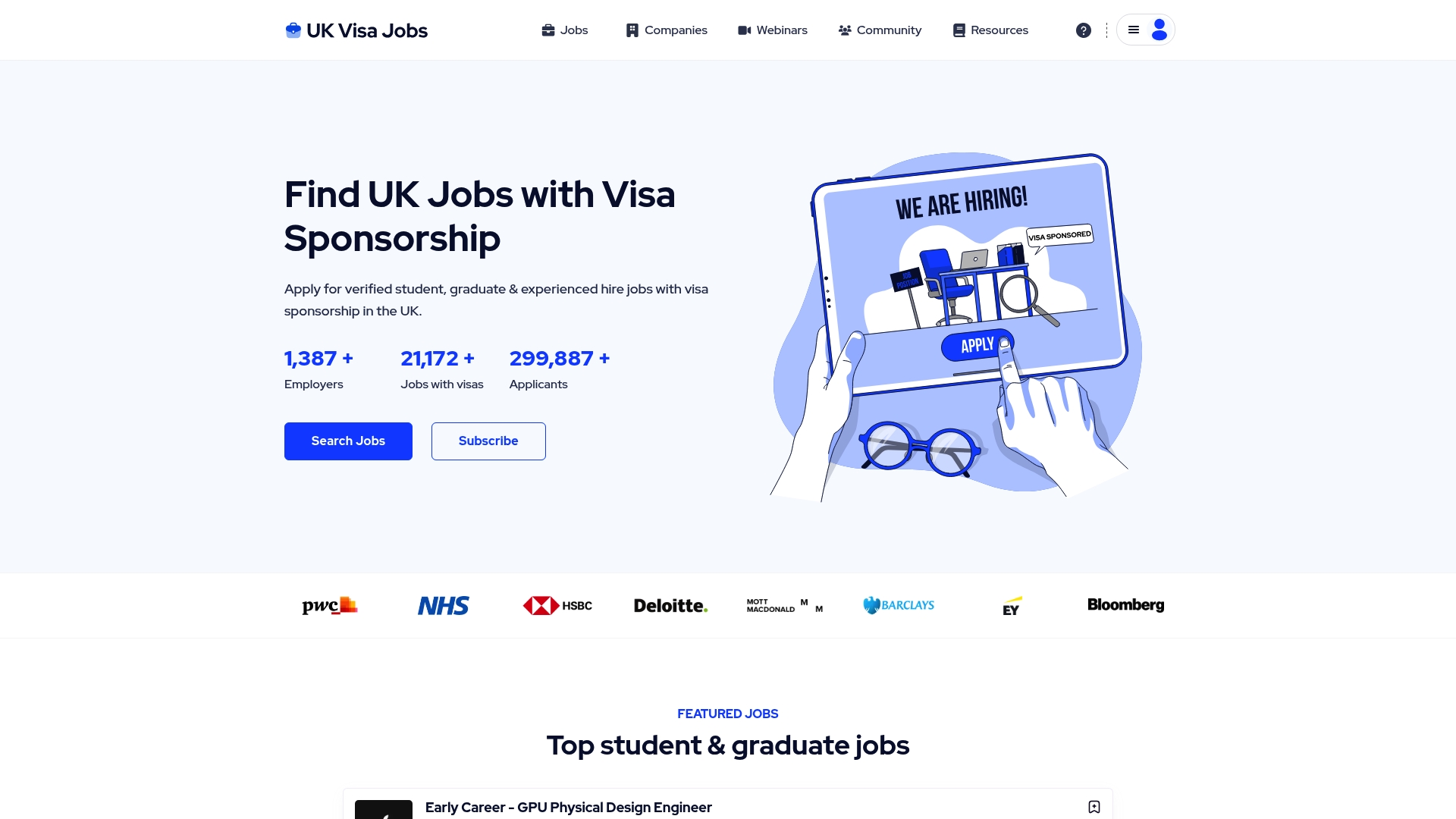
The experienced professionals job hunting guide on Ukvisajobs covers application strategy, CV tailoring for shortage occupations, and how to communicate your visa status effectively to UK employers. For graduates and students, the graduate job hunting guide addresses the specific advantages of the Graduate visa and how to use them in your search. Both resources are free to access and updated regularly to reflect current Home Office requirements and employer expectations.
FAQ
Can I work remotely in the UK on a Skilled Worker visa?
Yes, but only for the employer named on your Certificate of Sponsorship and in the role specified. Working remotely for a different employer or in a different role breaches your visa conditions.
Do remote UK jobs still require me to live in the UK?
Most do. Employers require UK residency for tax and payroll compliance, even when the role is fully remote. Living outside the UK while employed by a UK company creates legal and tax complications for both parties.
What visa types make it easiest to get a remote job in the UK?
Graduate and Spouse visas offer unrestricted work rights with no sponsorship cost to the employer. This makes holders significantly more attractive than candidates who require a full Skilled Worker sponsorship process.
Which job boards list verified remote visa sponsored roles in the UK?
Ukvisajobs and the DWP’s Find a Job portal both list verified visa sponsorship roles, with specialist boards reporting over 500 verified listings as of early 2026.
Should I disclose my visa status in my job application?
Yes, always. Employers ask about right-to-work status at screening, and disclosing visa status early removes ambiguity, builds trust, and allows the employer to assess sponsorship feasibility before investing time in interviews.
