


Types of NHS Visa Sponsorship Roles: 2026 Guide

NHS visa sponsorship roles are defined as positions eligible for the Health and Care Worker visa, a dedicated immigration route for qualified clinical and medical professionals seeking employment in the UK. The formal industry term is the Health and Care Worker visa, though healthcare job seekers commonly search for it as NHS visa sponsorship. Understanding the types of NHS visa sponsorship roles matters because eligibility depends on Home Office-approved Standard Occupational Classification codes, minimum skill levels, and salary thresholds. Crucially, care worker eligibility changed significantly from mid-2025, making it more important than ever to know exactly which roles qualify before you apply.
What are the main types of NHS visa sponsorship roles?
The Health and Care Worker visa covers a defined set of professional categories. Eligibility is tied to specific SOC 2020 codes and a minimum skill level of RQF level 6 for most roles, though some support positions qualify at lower levels under transitional arrangements.
The primary eligible categories include:
- Medical practitioners (doctors, surgeons, and consultants) at all career stages
- Nurses and midwives, including registered general nurses and specialist nurses
- Allied health professionals such as radiographers, physiotherapists, and occupational therapists
- Paramedics working in NHS ambulance services or contracted providers
- Pharmacists and pharmacy technicians at qualifying skill levels
- Social workers in adult and children’s services registered with the relevant professional body
- Nursing auxiliaries and assistants under SOC code 6131, eligible until December 2026 under transitional rules
Care workers and senior care workers under SOC codes 6135 and 6136 are no longer eligible for new Health and Care Worker visa applications since July 2025. That closure applies to new overseas applicants only. Existing visa holders can still switch sponsors or extend under specific conditions until July 2028.
Pro Tip: Check the exact SOC code for your target role on the Home Office occupational codes list before applying. Job titles can vary between NHS trusts, but the SOC code is what the Home Office uses to assess eligibility.

Which healthcare support roles still qualify, and what are the salary requirements?
Nursing auxiliaries and assistants remain eligible under SOC code 6131, but only until December 2026. After that date, the Immigration Salary List will be withdrawn, and new applications for this category are unlikely to be accepted.
The salary floor for nursing auxiliaries and assistants rose to £25,000 from April 2026, in line with the Agenda for Change Band 3 pay increase. This threshold reflects the minimum guaranteed basic pay required for sponsorship approval.
| Role | SOC Code | Minimum Salary | Eligible Until |
|---|---|---|---|
| Nursing auxiliary / assistant | 6131 | £25,000 | December 2026 |
| Care worker | 6135 | Not eligible (new applications) | Closed July 2025 |
| Senior care worker | 6136 | Not eligible (new applications) | Closed July 2025 |
| Registered nurse | 6141 | Going rate applies | Ongoing |
| Allied health professional | Various | Going rate applies | Ongoing |
Band 2 roles sit below RQF level 3 and remain ineligible for sponsorship. Only Band 3 and above qualify, and only where duties genuinely match the SOC code description. Salary calculations can include the High-Cost Area Supplement as guaranteed pay, but bonuses and overtime are excluded from threshold calculations. Misinterpreting which pay components count is one of the most common causes of visa application rejection.
Pro Tip: If you work in London or another high-cost area, confirm with your employer whether your High-Cost Area Supplement is treated as guaranteed pay for tax and pension purposes. If it is, it counts towards your salary threshold.
How NHS trust sponsorship and employer approval affect your eligibility
Sponsoring employers must be either approved NHS bodies or Care Quality Commission-registered providers. Without that status, no Certificate of Sponsorship can be issued, and your visa application cannot proceed.
The Certificate of Sponsorship is the document your employer issues to confirm your role, salary, and skill level to the Home Office. Sponsors must verify both the going rate for the occupation and the appropriate skill level before issuing it. The Home Office then assesses the certificate against its own standards.
Key employer responsibilities include:
- Holding a valid sponsor licence for the Health and Care Worker visa route
- Confirming that the role’s duties align with the assigned SOC code
- Certifying maintenance funds if the applicant cannot demonstrate £1,270 held for 28 consecutive days
- Ensuring the salary meets the going rate and minimum threshold for the specific occupation
The Health and Care Worker visa covers roles in NHS trusts, NHS-contracted organisations, independent health sector employers, and adult social care providers, provided the sponsor holds the correct licence. Regional variation exists in how actively NHS trusts recruit internationally, so it pays to research which trusts have active sponsorship programmes before you apply.
Practical steps to secure the right NHS visa sponsorship role
Securing a sponsored NHS role requires more than finding a vacancy. You need to verify eligibility at every stage of the process.
- Confirm your SOC code. Job duties must match the Home Office SOC code description precisely. A job title of “healthcare assistant” covers multiple SOC codes with very different eligibility outcomes.
- Check your employer’s sponsor licence. Ask directly whether the employer holds a valid Health and Care Worker visa sponsor licence. Do not assume all NHS employers are approved.
- Calculate your salary correctly. Include High-Cost Area Supplements only if they are guaranteed and pensionable. Exclude bonuses, overtime, and one-off payments.
- Prepare your maintenance evidence. You need £1,270 in your bank account for 28 consecutive days before applying, unless your employer certifies maintenance on your behalf.
- Understand visa switching rules. You can switch from other UK visa routes into the Health and Care Worker visa without leaving the UK, provided you meet all eligibility criteria at the point of switching.
- Stay current with policy changes. The closure of care worker sponsorship in July 2025 caught many applicants off guard. Sign up for NHS Employers updates and Home Office policy alerts.
Pro Tip: If you are already in the UK on a different visa, switching to the Health and Care Worker visa can save you the Immigration Health Surcharge, which is £1,035 per year for standard Skilled Worker applicants.
How sponsorship requirements compare across healthcare career levels
Sponsorship availability and requirements scale with career level and clinical specialisation. The table below compares key features across different types of healthcare sponsorship roles.
| Career level | Example roles | Skill level | Typical salary range | Employer type |
|---|---|---|---|---|
| Entry-level support | Nursing auxiliary (Band 3) | RQF 3 | From £25,000 | NHS trust, CQC provider |
| Mid-level clinical | Registered nurse, paramedic | RQF 6 | Going rate applies | NHS trust, independent sector |
| Specialist clinical | Radiographer, physiotherapist | RQF 6+ | Going rate applies | NHS trust, contracted provider |
| Senior/managerial | Consultant, senior pharmacist | RQF 7+ | Going rate applies | NHS trust, independent health |
Newly qualified professionals often face a narrower set of eligible roles because their salary sits closer to the minimum threshold. Experienced professionals with specialist qualifications have more options, including managerial and consultant-level positions that attract higher going rates. Allied health professionals such as radiographers and physiotherapists sit firmly within the eligible categories and are in consistent demand across NHS trusts. Social workers registered with Social Work England also qualify, provided the role duties align with the relevant SOC code.
Key takeaways
The Health and Care Worker visa is the formal sponsorship route for NHS roles, and eligibility depends entirely on SOC code alignment, skill level, and guaranteed salary, not job title alone.
| Point | Details |
|---|---|
| SOC code alignment is critical | Job duties must match the Home Office SOC code description; job titles alone do not determine eligibility. |
| Care worker route is closed | New applications for SOC 6135 and 6136 have been closed since July 2025; existing holders can extend until July 2028. |
| Nursing auxiliaries have a deadline | SOC 6131 roles remain eligible until December 2026 at a minimum salary of £25,000. |
| Salary calculations exclude bonuses | Only guaranteed pay, including High-Cost Area Supplements where applicable, counts towards the threshold. |
| Employer licence is non-negotiable | Sponsors must hold a valid Health and Care Worker visa licence; CQC registration alone is insufficient. |
What I have learned about navigating NHS visa sponsorship changes
The tightening of eligibility for care worker roles since 2025 has been the single biggest shift in NHS visa sponsorship in recent years. Many overseas applicants were mid-process when the closure was announced, and the lack of preparation cost them time and money. The lesson is clear: policy changes in this area move faster than most people expect.
What strikes me most is how often applicants focus on finding a job title that sounds right, rather than verifying the SOC code that governs it. I have seen strong candidates rejected not because they lacked qualifications, but because their employer’s job description did not map cleanly to the Home Office code. That is an avoidable mistake.
My advice to overseas healthcare professionals is to contact NHS trust HR teams directly and ask specific questions about their sponsorship volumes and current licence status. Many trusts are actively recruiting internationally but do not advertise that fact prominently. Proactive outreach puts you ahead of applicants who rely solely on job boards.
The December 2026 deadline for nursing auxiliary sponsorship is also closer than it appears. If you are targeting a Band 3 support role, you need to be applying now, not in six months. The window is narrowing, and the policy environment suggests it will not reopen in the same form.
Staying current with NHS Employers' guidance is not optional. It is the most reliable source for salary threshold updates and eligibility changes, and it publishes updates well before they take effect.
Ukvisajobs: find your NHS visa sponsorship role
Healthcare professionals searching for sponsored NHS roles need more than a list of vacancies. They need to know which employers hold active sponsor licences, which roles are currently open to overseas applicants, and how to position their application for success.
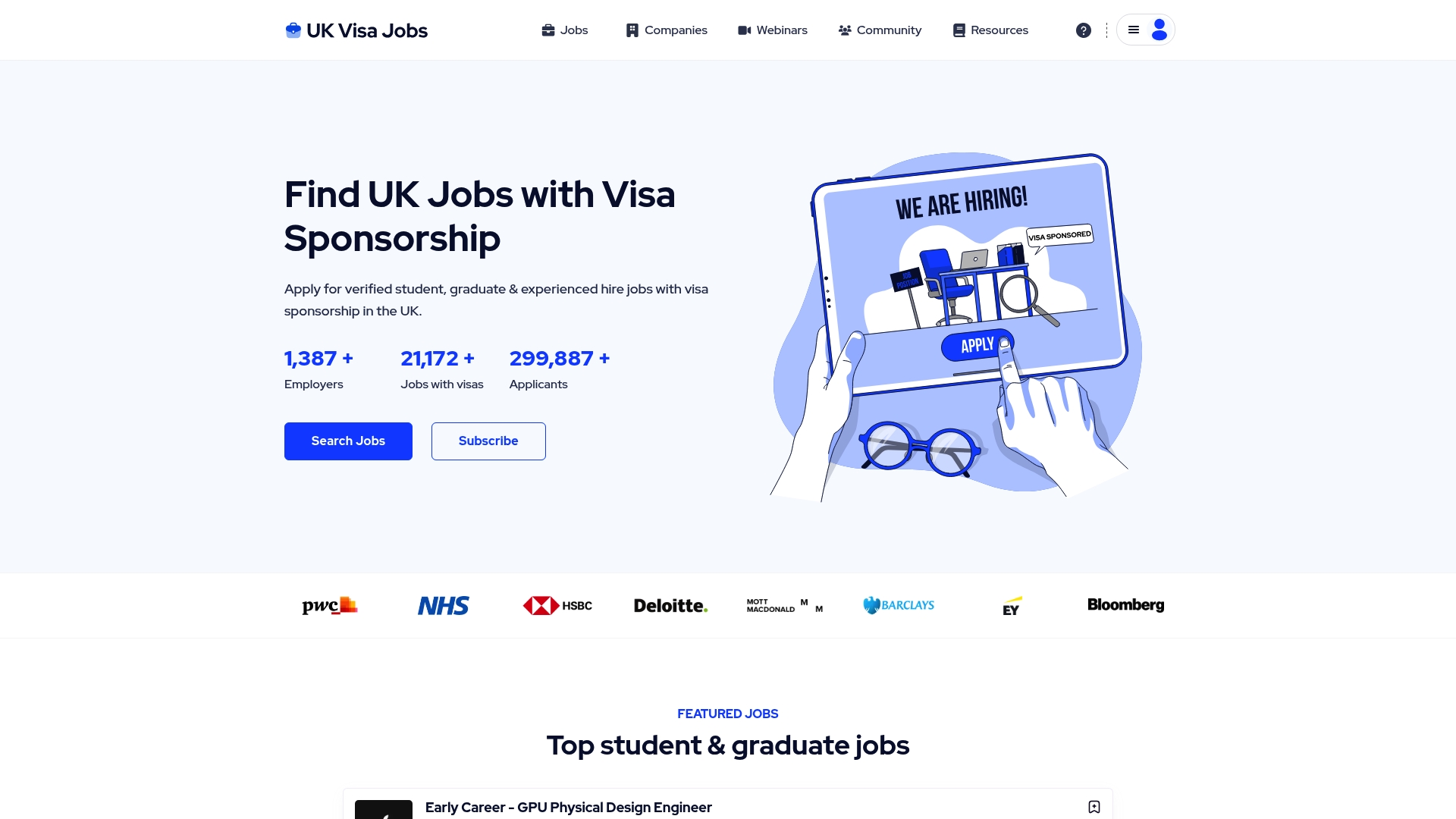
Ukvisajobs lists visa sponsored jobs across the NHS and wider UK healthcare sector, with filters that help you identify roles open to international applicants. For experienced healthcare professionals ready to take the next step, the experienced professionals job hunting guide covers the full process from role identification to visa application, with practical guidance on meeting eligibility criteria and working with NHS sponsors.
FAQ
What is the Health and Care Worker visa?
The Health and Care Worker visa is the UK immigration route for qualified medical and clinical professionals taking eligible roles with NHS trusts, CQC-registered providers, or NHS-contracted organisations.
Which roles are no longer eligible for NHS visa sponsorship?
Care workers and senior care workers under SOC codes 6135 and 6136 have been closed to new overseas visa applications since July 2025.
What salary do nursing auxiliaries need for visa sponsorship?
Nursing auxiliaries and assistants under SOC code 6131 require a minimum salary of £25,000 from April 2026, in line with the Agenda for Change Band 3 pay increase.
Can I include bonuses in my salary for the visa threshold?
Bonuses, overtime, and one-off payments do not count towards the salary threshold. Only guaranteed pay, including High-Cost Area Supplements where they are pensionable, is included.
How do I know if my employer can sponsor my visa?
Ask your employer directly whether they hold a valid Health and Care Worker visa sponsor licence. Sponsors must be approved NHS bodies or CQC-registered providers to issue a Certificate of Sponsorship.
