


What is a UK Spouse Visa: Your 2026 Guide

The UK spouse visa is officially the Family visa under Appendix FM of the UK Immigration Rules, granting non-UK nationals the right to live, work, and study in the UK alongside their British or settled partner. Commonly called the “spouse visa,” this route is regulated by the Home Office and sits within the broader UK family visa framework. An initial grant of 33 months applies to out-of-country applicants, while in-country switches receive 30 months. After five years of continuous residence, holders can apply for Indefinite Leave to Remain, placing them on a clear path to British citizenship.
What Is a Spouse Visa UK and Who Can Apply?
The UK spouse visa is available to legally married couples and civil partners where one person is a British citizen, a person with Indefinite Leave to Remain, or another form of settled status in the UK. Both parties must be aged 18 or over. The applicant is a non-UK national, and the UK-based partner acts as the sponsor.

The Home Office applies a “genuine and subsisting relationship” test to every application. Photographs and marriage certificates alone are insufficient proof; caseworkers expect objective evidence of a shared life. That means joint bank account statements, shared tenancy agreements, utility bills in both names, and correspondence sent to the same address. The scrutiny has tightened in recent years, and experts recommend prioritising evidence of shared financial responsibilities over symbolic items.
Pro Tip: Compile at least two years of evidence showing shared finances, communication, and cohabitation. A timeline document that organises your relationship history chronologically makes the caseworker’s job easier and reduces the risk of a refusal.
One critical distinction separates the spouse visa from two similar-sounding routes. The Marriage Visitor Visa permits a person to travel to the UK solely to marry, but grants no right to remain afterwards. The unmarried partner visa covers couples who have cohabited for at least two years but are not legally married or in a civil partnership. Applying on the wrong route is a costly mistake, so confirming your exact relationship status before submitting is non-negotiable.
The eligibility criteria in brief:
- Both parties must be aged 18 or over
- The relationship must be a legal marriage or civil partnership
- The UK sponsor must be a British citizen or hold settled status
- The couple must intend to live together permanently in the UK
- Neither party can be in a prohibited degree of relationship
What Financial and Accommodation Requirements Apply?
Meeting the financial requirement is where many applications fall short. The UK sponsor must earn at least £29,000 gross annual income, a threshold introduced in April 2024 and applicable to all new applicants from that date. Applicants who applied before 11 April 2024 remain subject to the previous £18,600 threshold, but anyone applying now must meet the higher figure.
A common misunderstanding is that the applicant’s overseas income counts towards this threshold. It does not. Only the sponsor’s income is counted unless the applicant is already legally working in the UK on a qualifying visa. This distinction catches many couples off guard and leads to preventable refusals.
The financial requirement can be met in several ways:
- Employment income: The sponsor’s gross annual salary from a salaried or self-employed role, evidenced by payslips and a letter from the employer.
- Cash savings: Savings above £16,000 can supplement income shortfalls. The calculation uses a specific formula set by the Home Office.
- Non-employment income: Rental income, dividends, or pension income may count, provided they are evidenced correctly.
- Combined income and savings: A combination of the above is permitted, subject to the Home Office’s calculation method.
Pro Tip: Gather six months of consecutive payslips and a corresponding bank statement for the same period. Gaps in employment history during that window can trigger requests for further evidence, which delays the decision.
The accommodation requirement is separate but equally firm. The Home Office requires that the couple’s planned UK home is adequate and not overcrowded, as defined by the Housing Act 1985. A property that is already overcrowded under that definition will not satisfy the requirement, regardless of the sponsor’s income. A letter from the property owner or a tenancy agreement confirming the address and number of occupants supports this part of the application.
| Requirement | Standard | Evidence needed |
|---|---|---|
| Minimum income | £29,000 gross per year | Payslips, employer letter, tax returns |
| Cash savings | Above £16,000 (to supplement income) | Bank statements covering 6 months |
| Accommodation | Adequate and not overcrowded | Tenancy agreement or property ownership proof |
| Relationship | Genuine and subsisting | Joint bills, statements, correspondence |
The strict financial requirement aims to reduce dependency on public funds. Limited flexibility exists only in exceptional human rights cases, and such exceptions are genuinely rare.
How Do You Apply for a UK Spouse Visa?
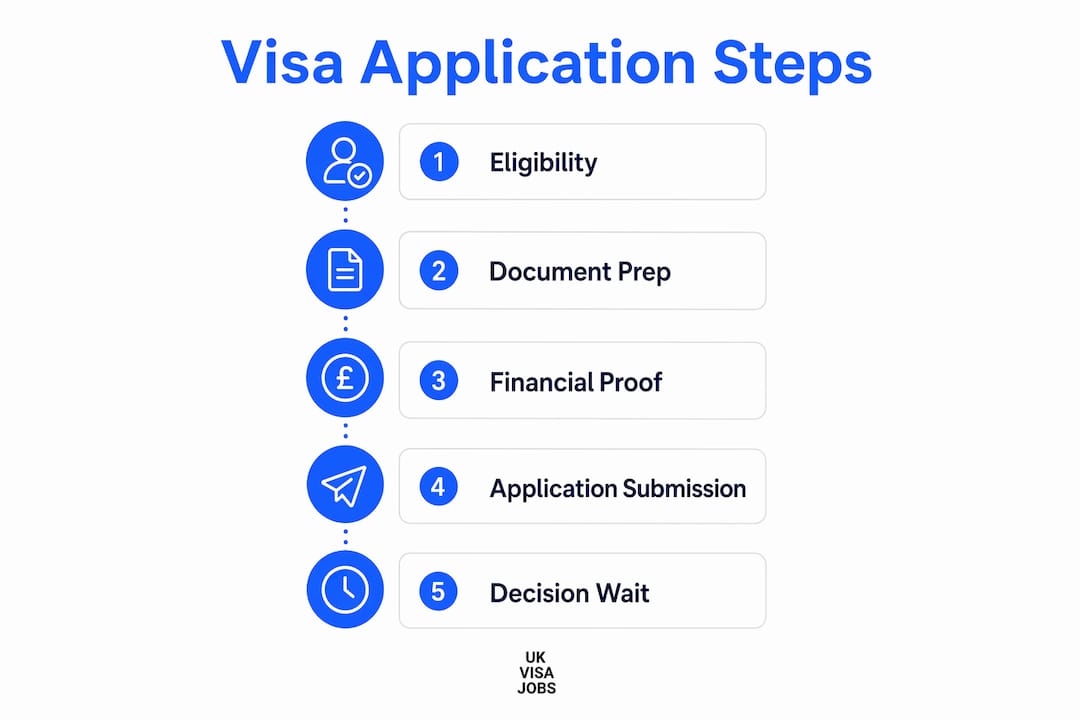
The application process is entirely digital. You complete the online form on the UK Visas and Immigration portal, pay the fee, and then attend a biometrics appointment. The order matters because the application date is the fee payment date, not the date you submit supporting documents. This affects when you must meet the financial and other eligibility requirements, so paying the fee before your circumstances change is critical.
Current fees from April 2026 are:
- Outside the UK: £2,064 per applicant
- Inside the UK (leave to remain): £1,407 per applicant
- Immigration Health Surcharge: £1,035 per year of leave granted, paid upfront at the time of application
The Health Surcharge for a 33-month grant therefore adds over £2,800 to the total cost. Budget for this before you begin.
After paying, you upload supporting documents through UKVCAS (for in-country applicants) or TLScontact (for most overseas applicants). Caseworkers do not chase missing documents, so a complete, well-organised submission is the single most important thing you can do to protect your application. Use a checklist and label every document clearly.
Processing times follow a predictable pattern:
- Out-of-country applications: around 12 weeks on average
- In-country leave to remain applications: around 8 weeks on average
- Priority service: available for eligible applications and significantly reduces the wait, though it carries an additional fee
If you are already in the UK on a qualifying visa and apply before your current leave expires, Section 3C leave automatically extends your lawful stay while the application is pending. Missing the deadline and applying after your leave expires creates an overstay, which can affect future applications.
What Rights Does a UK Spouse Visa Grant?
The UK spouse visa grants broad rights from the day you enter or switch status. Understanding these rights helps you plan your life in the UK with confidence.
- Right to work: You can take up any employment, including self-employment, without restriction. You do not need a separate work permit or employer sponsorship.
- Right to study: You can enrol on any course, including full-time degree programmes, without needing a Student visa.
- Travel: You can leave and re-enter the UK freely during the visa’s validity. Extended absences can affect your Indefinite Leave to Remain application, so track your travel carefully.
- No access to public funds: You cannot claim most means-tested benefits, including Universal Credit, Housing Benefit, or Child Tax Credit. This restriction applies for the duration of your leave.
- NHS access: Because you pay the Immigration Health Surcharge, you have full access to NHS services on the same basis as a UK resident.
Maintaining compliance throughout your leave is non-negotiable. Breaching the public funds restriction or working in a way that violates your conditions can jeopardise your Indefinite Leave to Remain application after five years. The five-year continuous residence requirement is counted from the date of your first entry on the spouse visa, so keeping accurate records from day one protects your settlement pathway.
Once you hold Indefinite Leave to Remain, you become eligible to apply for British citizenship after a further 12 months, provided you meet the residency and good character requirements.
Key Takeaways
The UK spouse visa is a Family visa under Appendix FM that grants the right to live, work, and study in the UK, with a clear route to Indefinite Leave to Remain after five years of continuous residence.
| Point | Details |
|---|---|
| Official visa category | The spouse visa is the Family visa under Appendix FM, not a standalone visa category. |
| Financial threshold | The UK sponsor must earn at least £29,000 gross per year under the April 2024 rules. |
| Application date rule | The application date is the fee payment date, which determines when eligibility is assessed. |
| Document quality | Caseworkers do not request missing items, so a complete submission is critical to approval. |
| Rights on arrival | Spouse visa holders can work, study, and access the NHS without additional permits. |
The Detail That Trips Up Even Well-prepared Applicants
Most people spend weeks gathering documents and then overlook one thing: the sequence of events on the day they pay the application fee. The Home Office treats the fee payment date as the application date. That means your sponsor’s income, your accommodation, and your relationship evidence must all be in order before you click pay, not before you upload documents.
I have seen applicants pay the fee in a month when their sponsor’s payslip showed a lower figure due to unpaid leave or a bonus deferral. The caseworker assessed eligibility against that month, and the application failed. The fix is straightforward: check the most recent payslip before paying, and if the figure is temporarily low, wait until the next pay cycle.
The second pitfall is treating the relationship evidence as a formality. A marriage certificate proves you are married. It does not prove you live together, share finances, or have a genuine partnership. Caseworkers are trained to identify thin applications, and a file that contains only a certificate and a few photographs will attract scrutiny. Build your evidence file the way you would build a case: chronologically, with corroborating documents at every stage.
If you qualify for the priority service, use it. The standard 12-week wait for overseas applications is a long time to be separated from your partner. The priority fee is significant, but the time saved is worth it for most families.
Finally, track every day you spend outside the UK from the moment you arrive. Indefinite Leave to Remain requires continuous residence, and the Home Office counts absences carefully. A spreadsheet with entry and exit dates, cross-referenced against your passport stamps, takes minutes to maintain and can save your settlement application years later.
Finding Work After Your Spouse Visa Is Granted
Arriving in the UK on a spouse visa with the right to work is a genuine advantage. You are not tied to a single employer, and you do not need sponsorship. The challenge is knowing where to look and how to present yourself to UK employers who may be unfamiliar with your background.
Ukvisajobs publishes listings and guides specifically for people navigating the UK job market with visa status. Whether you are an experienced professional or a recent graduate, the job hunting guide for professionals covers how to position your CV, approach UK employers, and secure a role that matches your experience. You can also browse visa-sponsored roles across sectors, which is useful if your circumstances change and you need employer sponsorship in the future. Professional advice from an immigration solicitor remains the right call for complex cases, but pairing that with practical job search support gives you the clearest path forward.
FAQ
What is the difference between a spouse visa and a partner visa?
The UK spouse visa applies to legally married couples and civil partners. The unmarried partner visa covers couples who have cohabited for at least two years but are not married, and it carries the same financial and relationship requirements.
How long does a UK spouse visa last?
Out-of-country applicants receive an initial grant of 33 months. In-country applicants switching status receive 30 months. Both routes lead to Indefinite Leave to Remain after five years of continuous residence.
Can a spouse visa holder work in the UK?
Yes. A spouse visa grants the unrestricted right to work in any role, including self-employment, without needing employer sponsorship or a separate work permit.
What documents are needed for a spouse visa UK application?
Core documents include the sponsor’s payslips and employer letter, six months of bank statements, a marriage or civil partnership certificate, proof of adequate accommodation, and evidence of a genuine and subsisting relationship such as joint bills and correspondence.
What happens if my spouse's visa application is refused?
You can request an administrative review or appeal to the First-tier Tribunal (Immigration and Asylum Chamber), depending on the grounds for refusal. Seeking advice from a regulated immigration adviser before responding to a refusal is strongly recommended.
