


What Is a Sponsored Job Offer in the UK: 2026 Guide

A sponsored job offer is a formal employment offer from a UK employer that holds a valid Home Office sponsor licence, giving that employer the legal authority to issue a Certificate of Sponsorship to an overseas worker. The Certificate of Sponsorship, known as a CoS, is a 14-character reference number tied to a named individual, a specific role, a salary, and a Standard Occupational Classification code. Without it, an international applicant cannot apply for a Skilled Worker visa. The standard salary threshold is £41,700 per year or 100% of the occupation’s going rate, whichever is higher, and applicants must also meet a B2 English language requirement.
What Is a Sponsored Job Offer, and How Does It Differ From a Regular Job?
A regular job offer is simply an employer’s agreement to hire you. A sponsored job offer goes further. It means the employer is also taking on legal responsibility for your immigration status in the UK.

The critical distinction is the licence. Any UK employer can offer you a job, but only a Home Office-licensed sponsor can issue a CoS. Many applicants confuse a job offer with sponsorship, but the two are legally separate acts. A job offer without a CoS from a licensed employer has no immigration value.
The CoS itself is not a physical certificate but a reference number valid for three months. You use it when submitting your Skilled Worker visa application to UK Visas and Immigration. It contains your name, the job title, the SOC 2020 code, and the salary the employer has committed to pay.
How Do Sponsored Job Offers Work: Process and Employer Responsibilities
The process follows a clear sequence, and understanding each step helps you identify genuine opportunities quickly.
- The employer obtains a sponsor licence. The employer applies to the Home Office and, if approved, gains access to the Sponsor Management System. This is the online portal through which all sponsorship activity is managed.
- The employer assigns a CoS. Once a job offer is agreed upon, the employer assigns a CoS through the Sponsor Management System for the specific role and individual. The CoS captures the salary, job duties, and SOC code.
- The applicant applies for a Skilled Worker visa. You submit your visa application to UK Visas and Immigration, using the CoS reference number alongside supporting documents such as proof of English proficiency and financial maintenance funds.
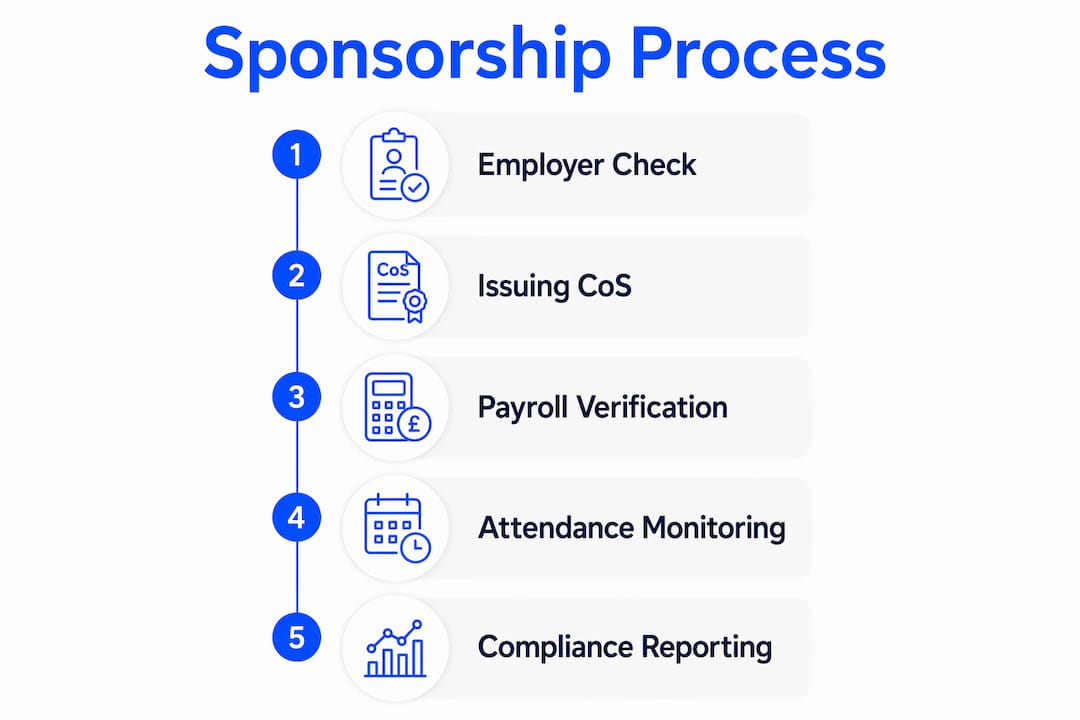
- Employer maintains ongoing compliance. Sponsorship does not end at visa approval. Employers must report changes in your employment status to the Home Office within 10 days, conduct right-to-work checks, and keep documented records.
- Employee rights education is mandatory. From April 2026, sponsors must keep signed documents proving they have educated sponsored workers on their UK employment rights. Issuing a contract alone is no longer sufficient.
Pro Tip: Ask any prospective employer for their sponsor licence number before investing time in an application. You can verify it instantly on the government’s Register of Licensed Sponsors at GOV.UK.
Employer responsibilities extend well beyond the hiring process. Sponsors must conduct HMRC payroll checks, monitor attendance, and report any changes in role or salary. Failure to meet these duties risks licence revocation, which would directly affect your visa status.
What Are the Eligibility Requirements for a Sponsored Job Offer?
Eligibility for a sponsored job offer operates on two levels: the role must qualify, and you, as the applicant, must qualify.
Role requirements
-
Skill level: The job must be at RQF Level 6 or above. This broadly corresponds to graduate-level work. Roles below this threshold are not eligible under the Skilled Worker route.
-
Salary: The role must pay at least £41,700 per year or the going rate for that occupation, whichever is higher. Certain shortage occupations and health and care roles carry different thresholds.
-
Eligible role test: From 2026, the former “genuine vacancy” test has been replaced by the “eligible role” requirement. The role must genuinely exist within the business, fit the employer’s operating model, and accurately reflect the duties listed on the CoS.
Applicant requirements
-
English language: You must demonstrate B2 level English, typically through a Secure English Language Test, a degree taught in English, or nationality from a majority English-speaking country.
-
Financial maintenance: You must show you have held at least £1,270 in your bank account for 28 consecutive days before applying, unless your employer certifies maintenance on the CoS.
-
No criminal grounds for refusal: Standard immigration suitability checks apply.
| Requirement | Regular job offer | Sponsored job offer |
|---|---|---|
| Employer licence needed | No | Yes, Home Office sponsor licence |
| CoS required | No | Yes, 14-character reference number |
| Salary threshold | Market rate | £41,700 or going rate, whichever is higher |
| Skill level | Any | RQF Level 6 or above |
| English language test | Not required by employer | B2 level required |
The Home Office uses payroll data sharing with HMRC to verify that the salary stated on the CoS is actually paid. Artificially inflated salaries on paper will be detected, and the employer’s licence will be at risk.
What Are the Benefits and Risks of Sponsored Job Offers?
Sponsored employment offers genuine, legally protected access to the UK labour market. The benefits are substantial, but the risks of poorly vetted sponsorship are equally real.
Key benefits
-
Legal right to work: A Skilled Worker visa granted on the basis of a sponsored job offer gives you full legal status to live and work in the UK.
-
Path to settlement: After five years on a Skilled Worker visa, you may be eligible to apply for Indefinite Leave to Remain (ILR), which is permanent residency.
-
Employment rights protection: Sponsored workers are entitled to the same UK employment rights as domestic workers, including minimum wage protections, holiday entitlement, and protection from unfair dismissal.
-
Family inclusion: Dependants, including a spouse or partner and children under 18, can typically apply to join you in the UK.
Risks to be aware of
-
Employer non-compliance: If your employer loses their sponsor licence, your visa may be curtailed. You would have 60 days to find a new licensed sponsor or leave the UK.
-
Fraudulent schemes: Legitimate sponsors do not charge candidates fees and cannot guarantee visa approval timelines. Any employer asking you to pay for sponsorship is operating fraudulently.
-
Salary misrepresentation: The Home Office cross-references CoS salary data with HMRC records. If your actual pay does not match the CoS, both you and your employer face serious consequences.
Transparency and HR compliance by sponsors are key signals of legitimate sponsorship. An employer who communicates clearly about their compliance duties is far less likely to put your visa status at risk.
Pro Tip: Before accepting any offer, check the employer’s sponsor licence status on the official Register of Licensed Sponsors at GOV.UK. This takes under two minutes and confirms the licence is active.
How Do You Find and Verify Genuine Sponsored Job Offers?
Finding a legitimate sponsored job offer requires more than searching for the word “sponsorship” in a job advert. Verification is the step most applicants skip, and it is the most important one.
-
Check the Register of Licensed Sponsors first. The government publishes an up-to-date list of all employers currently licensed to sponsor workers. Search by employer name before you apply. If the employer is not on the list, they cannot legally sponsor you, regardless of what their advert says.
-
Use specialist job boards. Platforms such as Ukvisajobs list roles specifically from employers who hold active sponsor licences, saving you the manual verification step on every application.
-
Read job descriptions carefully. Genuine sponsored roles will reference the Skilled Worker visa route, state the SOC code or job level, and confirm the salary meets the threshold. Vague references to “visa assistance” or “we can help with your visa” are not the same as confirmed sponsorship.
-
Assess employer transparency. A legitimate employer will discuss their Sponsor Management System process, confirm they hold a licence, and be clear about what the CoS covers. Evasiveness about these details is a warning sign.
-
Avoid upfront fees. No legitimate employer charges a candidate for sponsorship. Any request for payment in exchange for a CoS or a guaranteed visa is a scam.
Pro Tip: When reading a job advert, look for the phrase “Certificate of Sponsorship” rather than just “visa sponsorship.” The CoS is the legal instrument. Adverts that reference it specifically signal a more informed and compliant employer.
Resources such as UK insight programmes can also help you build the professional profile that licensed sponsors look for, particularly if you are a recent graduate entering the UK job market for the first time.
Key Takeaways
A sponsored job offer is only legally valid when it comes from a Home Office licensed employer who issues a Certificate of Sponsorship tied to a qualifying role, salary, and skill level.
| Point | Details |
|---|---|
| Sponsorship requires a licence | Only Home Office licensed employers can issue a CoS and legally sponsor overseas workers. |
| CoS is the legal instrument | The 14-character CoS reference number, not the job offer letter, is what enables your visa application. |
| Salary and skill thresholds apply | Roles must pay at least £41,700 or the going rate and sit at RQF Level 6 or above. |
| Verify before you apply | Check the government Register of Licensed Sponsors to confirm any employer’s active licence status. |
| 2026 compliance rules are stricter | From April 2026, sponsors face HMRC payroll checks and must document employee rights education. |
Why the Gap Between a Job Offer and Real Sponsorship Matters More than Ever
The single most costly mistake I see international applicants make is treating a job offer and a sponsored job offer as the same thing. They are not. A company can offer you a role in good faith and still be completely unable to sponsor you, either because they never applied for a licence or because their licence has lapsed.
The 2026 regulatory changes make this distinction even sharper. The Home Office now cross-references CoS salary data directly with HMRC payroll records. That means an employer who inflates a salary on paper to meet the threshold but pays you less in practice faces licence revocation. Your visa goes with it. This is not a theoretical risk. It is an enforcement mechanism that is already active.
The shift from the “genuine vacancy” test to the “eligible role” standard also signals a more sophisticated level of scrutiny. The Home Office is no longer just asking whether a job exists. It is asking whether the job genuinely fits the employer’s business model, whether the duties match the CoS, and whether the salary is accurate. That is a higher bar, and it protects applicants as much as it regulates employers.
My practical advice: treat employer compliance behaviour as part of your due diligence. An employer who is vague about their Sponsor Management System, reluctant to confirm their licence number, or who asks you to contribute to sponsorship costs is not a safe bet. The best sponsored employers are transparent, organised, and proactive about their legal duties. Those are the organisations worth pursuing.
Sponsored Job Listings for International Applicants
Finding a genuine sponsored role should not feel like searching for a needle in a haystack. Ukvisajobs is a dedicated job board built specifically for international applicants, students, and recent graduates seeking visa-sponsored jobs across the UK.
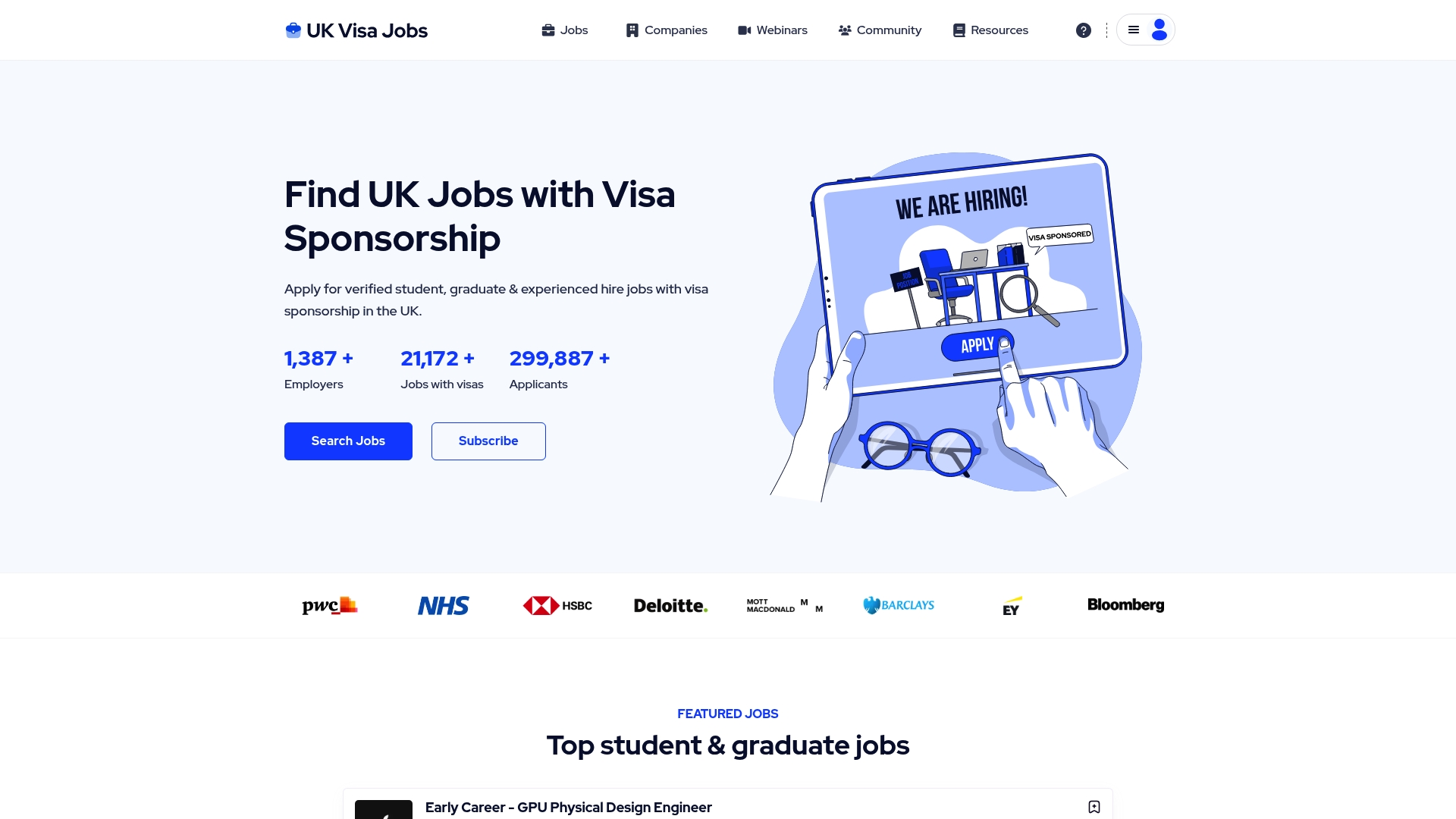
Every listing on Ukvisajobs is from an employer operating within the UK’s sponsorship framework. The platform removes the guesswork of manual licence verification and puts confirmed opportunities in one place. Whether you are entering the UK job market for the first time or looking to change roles under an existing visa, Ukvisajobs gives you a reliable starting point for your search.
FAQ
What is the difference between a job offer and a sponsored job offer?
A standard job offer is an employer’s agreement to hire you. A sponsored job offer additionally means the employer holds a Home Office sponsor licence and will issue a Certificate of Sponsorship, which is required for a Skilled Worker visa application.
How do I check if an employer can sponsor me?
Search the government’s Register of Licensed Sponsors at GOV.UK using the employer’s name. If they do not appear on the list, they cannot legally issue a Certificate of Sponsorship.
Can an employer charge me for visa sponsorship?
No. Legitimate sponsors do not charge candidates fees for sponsorship. Any employer requesting payment in exchange for a CoS or a visa guarantee is operating a fraudulent scheme.
What happens if my sponsor loses their licence?
If your employer’s sponsor licence is revoked, your Skilled Worker visa may be curtailed. You typically have 60 days to find a new licensed sponsor or make alternative immigration arrangements.
What salary do I need for a sponsored job offer?
The standard salary threshold is £41,700 per year or 100% of the going rate for the occupation, whichever is higher. Some roles in shortage occupations or the health and care sector carry different rates.
